
Repair · Resurface · Replace · Build
Repair, Resurface or Rebuild Your Connecticut Deck
We inspect the entire deck—from boards, railings and stairs to joists, beams, posts, footings and the connection to your home—then explain what can be repaired, what can be reused and when replacement makes more sense.
HIC.0705773 · Fully insured · Written Project Scopes · Serving All 8 Connecticut Counties
Deck Repair Composite Decking Railings & Stairs Porches & Pool Decks
What Does Your Deck Need?
Start with what you know. We will help determine the right scope after reviewing the deck and the structure beneath it.
Refresh My Deck
Maintain and improve the existing surface. Cleaning, sanding, selective board replacement, staining and sealing.
Repair My Deck
Fix localized damage, loose railings, unsafe stairs, isolated rot or other specific problems.
Resurface My Deck
Replace worn boards, railings and trim while retaining a frame that is still structurally serviceable.
Replace My Deck
Remove and rebuild an aging, damaged or poorly configured deck.
Build a New Deck
Plan a new outdoor space, addition, pool deck, porch or elevated deck.
I'm Not Sure — Help Me Decide
Tell us what you are seeing and we will help identify the right path.
Repair, Resurface or Replace?
The right answer depends on more than the condition of the visible boards. The framing, ledger, beams, posts, footings, stairs and railings all affect whether a deck can be repaired or reused.
Repair
Best When
- Damage is limited
- The frame remains sound
- The deck layout still works
- The remaining materials have useful life
Typical Work
- Board replacement
- Local framing repairs
- Railing reinforcement
- Stair repair
- Fastener and connector replacement
Resurface
Best When
- Boards and railings are worn
- The structure is serviceable
- The existing size and layout are acceptable
- The framing can support the selected material
Typical Work
- Remove old decking
- Inspect and reinforce framing
- Apply joist protection where appropriate
- Install new decking
- Replace railings, fascia and stair surfaces
Replace
Best When
- Rot is widespread
- Posts, beams or footings are failing
- The ledger connection is deficient
- The frame is near the end of its useful life
- The homeowner wants a major layout change
Typical Work
- Demolition
- New footings and framing
- Revised layout
- New decking, railings and stairs
- Permit and inspection coordination
Get Started
Start With a Guided Deck Estimate
Answer a few questions about the deck, materials, condition and location. Upload photos for a more useful preliminary review.
Connecticut Deck Estimate Builder
Step 1 of 4
What deck project do you need help with?
Services
View all services Connecticut Deck Services
From localized repairs to complete deck construction, every project begins with a clear understanding of the existing conditions and intended result.
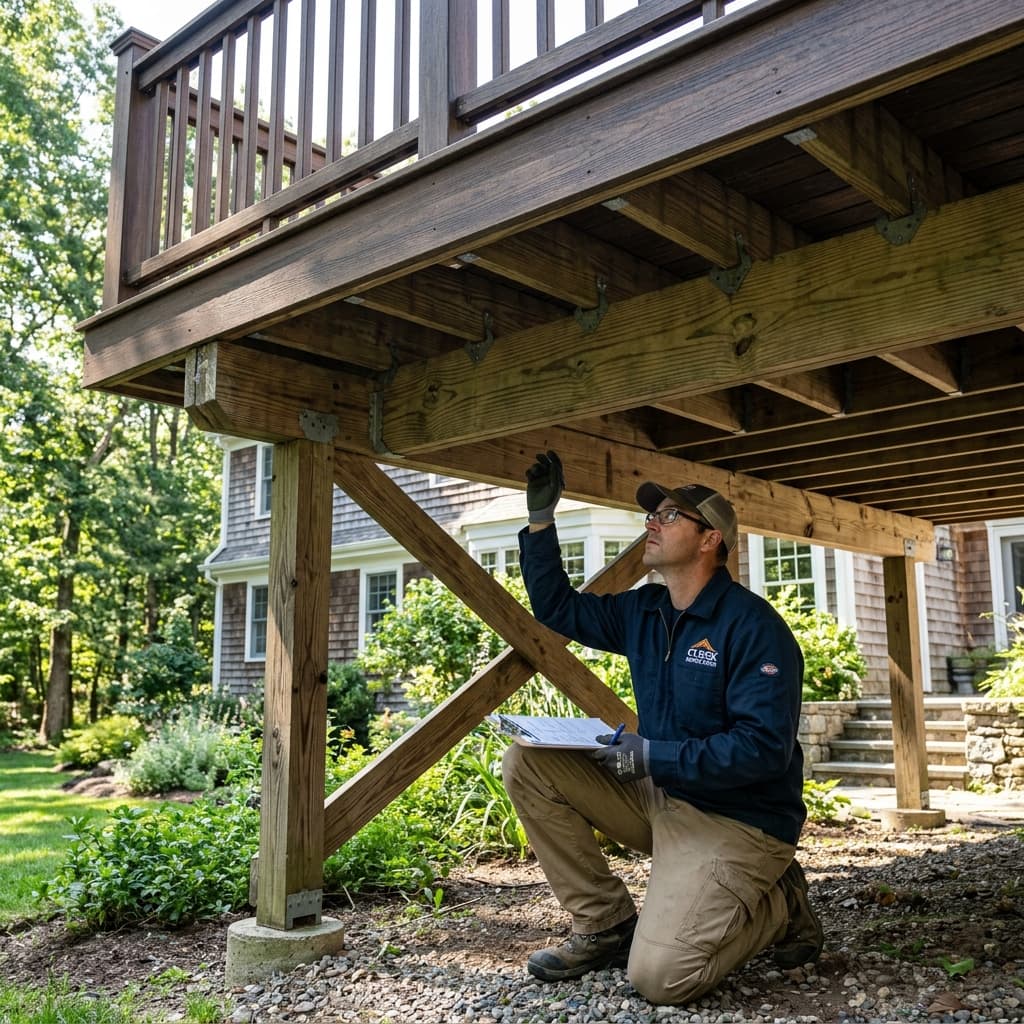
Deck Evaluation
A complete review of visible conditions and accessible structural components to determine whether repair, resurfacing or replacement should be considered.
Learn more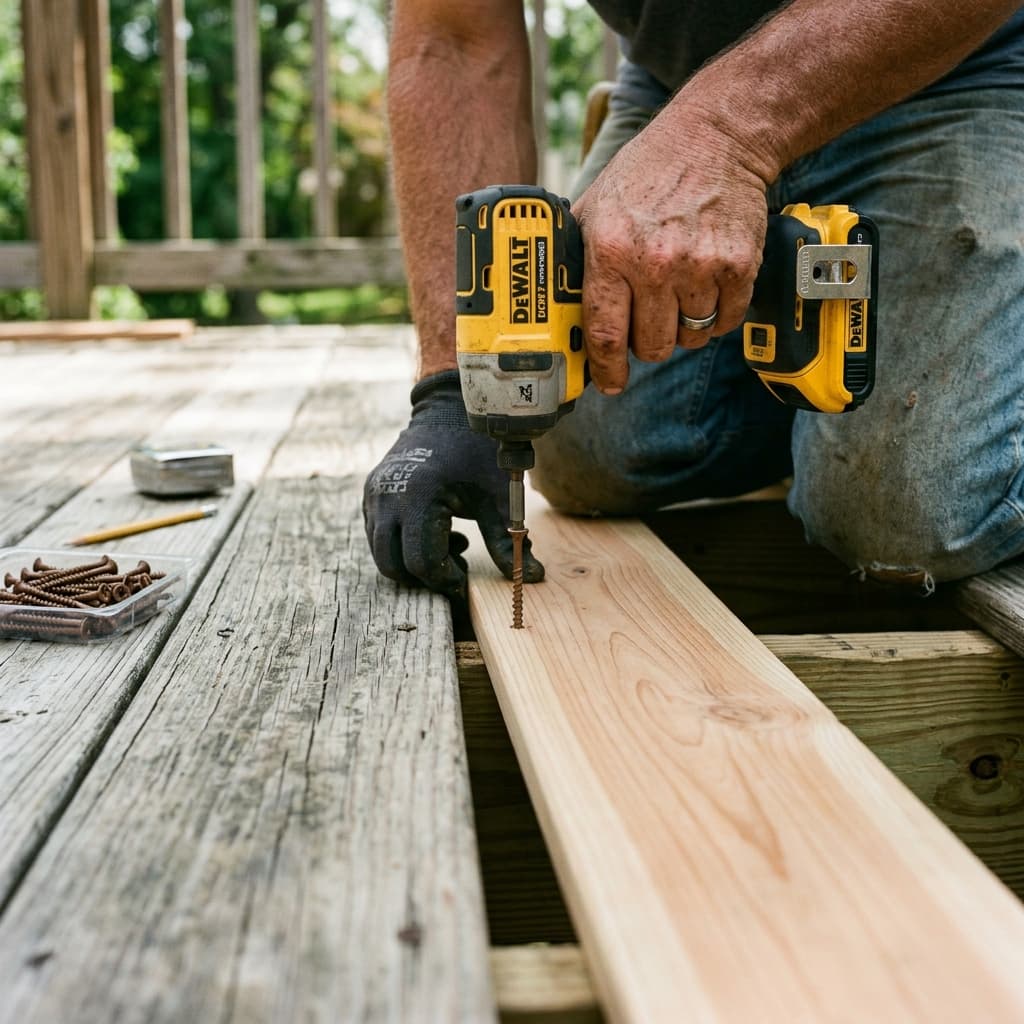
Deck Repair
Professional repair for loose boards, damaged railings, unsafe stairs, rotted wood, and structural concerns.
Learn more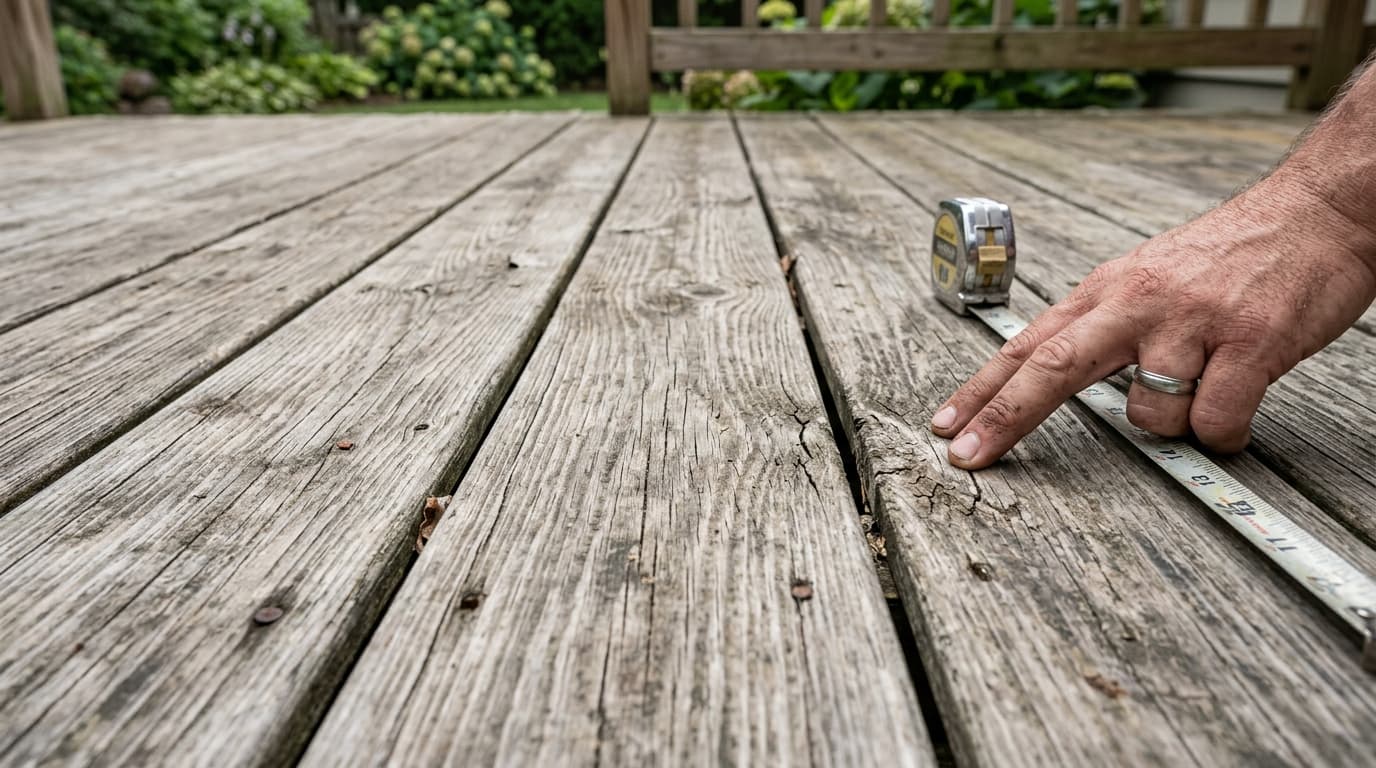
Deck Resurfacing
Save your framing and replace surface boards, railings and trim to refresh your worn deck.
Learn more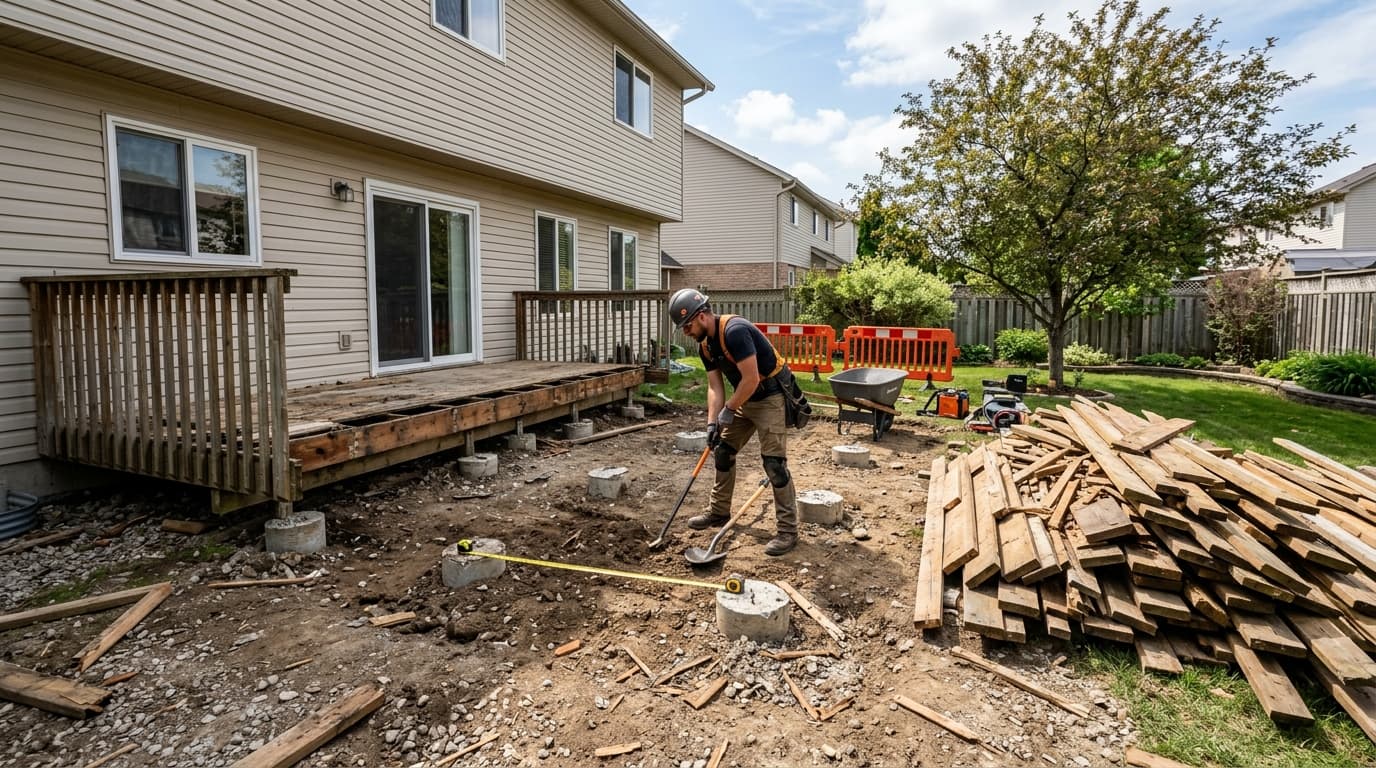
Deck Replacement
Full deck rebuilds, wood-to-composite upgrades, and complete frame and surface replacement.
Learn more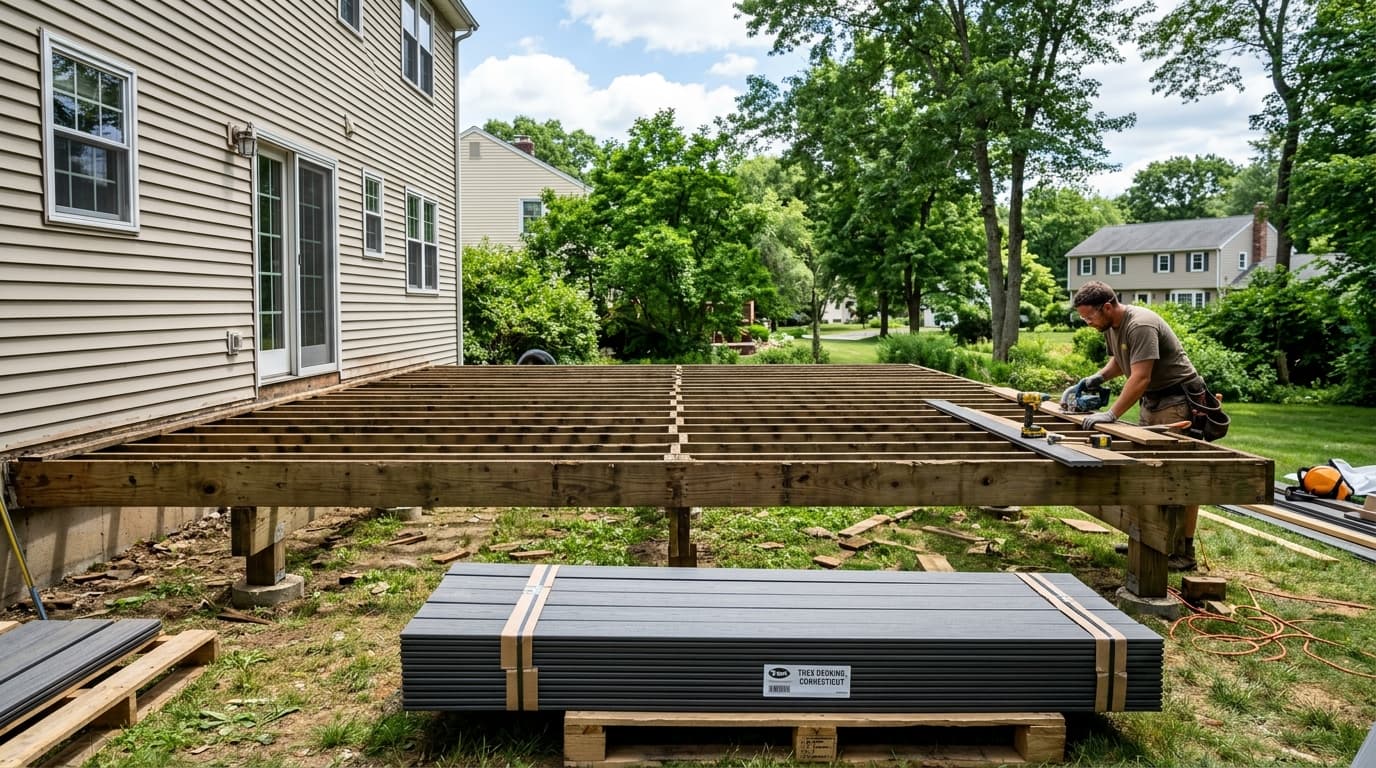
New Deck Construction
Plan and build a new deck around the home, property, desired use, material preferences and permitting requirements.
Learn more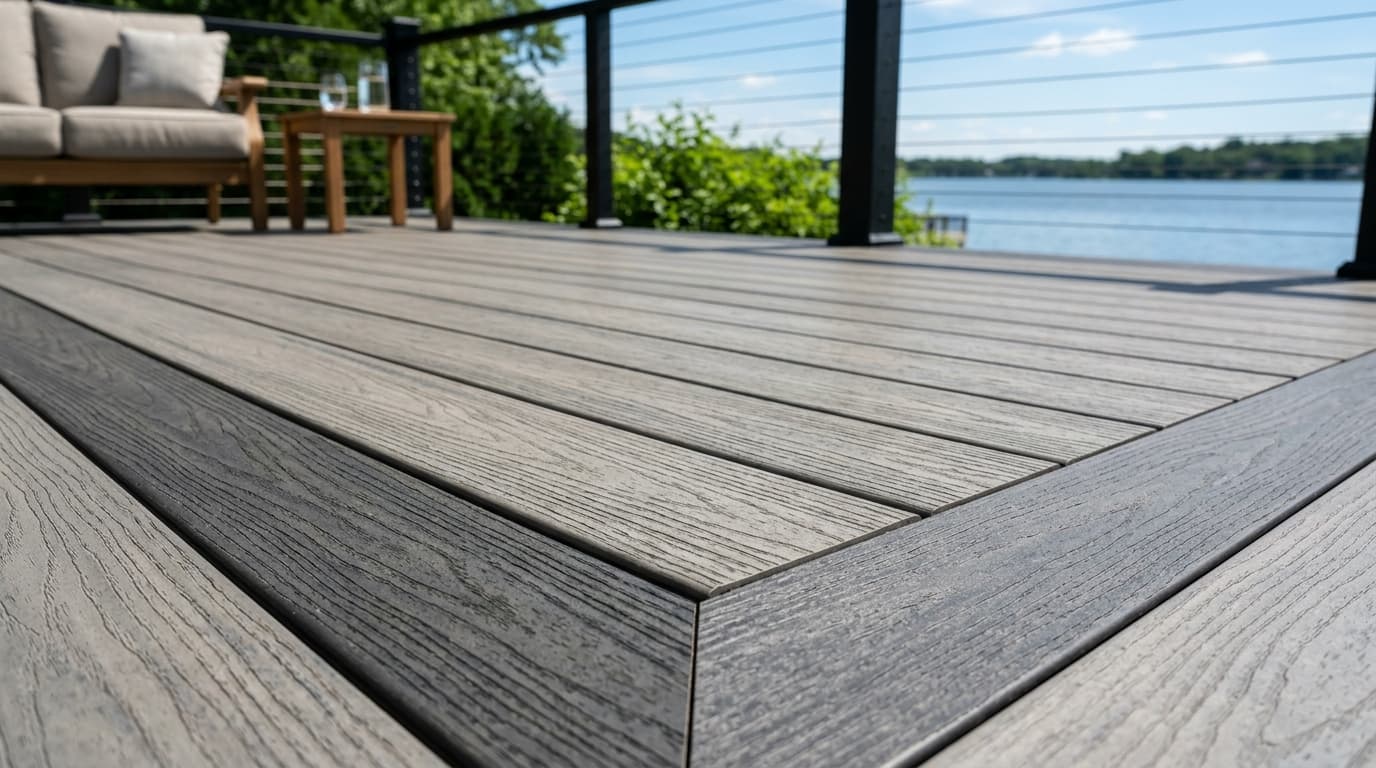
Composite & PVC Decking
Compare Trex, TimberTech, capped composite and advanced PVC options for low-maintenance, high-durability deck surfaces.
Learn moreOur Process
How a Connecticut Deck Evaluation Works
Every project starts with understanding the full condition of the deck — not just the surface.
Step 1
Tell Us What You Are Seeing
Describe the age, condition and problems. Upload wide-angle and close-up photos when available.
Step 2
Review the Entire Deck
We look beyond surface boards and consider railings, stairs, joists, beams, posts, footings, fasteners, flashing and the connection to the home.
Step 3
Identify Viable Project Paths
We explain whether localized repair, resurfacing or replacement appears appropriate and identify areas that require closer review.
Step 4
Compare Materials and Scope
Review decking, railing, stair, trim and layout options based on the condition of the structure and the intended use.
Step 5
Receive a Written Proposal
The proposal defines the included work, project assumptions, selected materials, pricing and next steps.
Step 6
Schedule and Complete the Project
Once approved, the project moves through planning, permitting where applicable, construction, cleanup and final walkthrough.
Signs Your Deck May Need Attention
Many deck problems start small and worsen over time. Recognize the warning signs before they become safety concerns.
Surface Problems
- Soft or splintering boards
- Widespread cracking
- Loose fasteners
- Peeling coatings
- Ponding water
- Visible mold or decay
Railing & Stair Problems
- Movement when pushed
- Loose balusters
- Rotting stair stringers
- Uneven steps
- Missing graspable handrail
- Unstable landings
Structural Problems
- Sagging sections
- Split beams
- Deteriorated joists
- Leaning posts
- Failing footings
- Visible separation from the home
Age & Planning Problems
- Deck older than 20 years
- Unknown construction history
- Surface-only quote without underside inspection
- Planned composite conversion
- Failed home inspection
- Upcoming home sale
Worried Your Deck May Be Unsafe?
Loose railings, unstable stairs, soft boards, sagging framing and movement at the house connection should not be ignored. Request a focused deck-safety evaluation.
Send Us Photos of Your Deck
Upload wide views, the underside, railings, stairs, posts, the house connection and any visible damage. We can use the photos to prepare for the onsite evaluation and identify areas that need closer inspection.
Materials
Compare Decking Materials
The right material depends on your budget, maintenance preference, sun exposure and how you use your deck.
| Material | Cost | Maintenance |
|---|---|---|
| Pressure-Treated Wood | Lowest initial cost | Annual staining or sealing |
| Cedar | Moderate | Regular sealing recommended |
| Capped Composite | Higher initial, lower lifetime | Occasional cleaning |
| Advanced PVC | Highest initial | Minimal — occasional cleaning |
Not sure which material is right for your deck?
Use the Deck Cost CalculatorRepair. Replace. Upgrade.
What Homeowners Receive From the Evaluation
Every project starts with a thorough understanding of what the deck actually needs.
Complete Deck Inspection
We evaluate the visible deck surface, railings, stairs, framing, joists, beams, posts, footings and the connection to your home.
Clear Repair, Resurface & Replacement Options
You receive an explanation of what can be repaired, what can be preserved and when replacement makes more sense.
Written Project Scope
The proposal defines the included work, project assumptions, selected materials, pricing and next steps.
Material Guidance & Planning
Compare wood, composite and PVC based on appearance, maintenance, durability and budget for your specific deck conditions.
Cost Planning
What Does a Deck Project Cost in Connecticut?
Project cost depends on size, height, access, demolition, framing, stairs, railings, material selection, structural conditions and permitting requirements.
Localized Repairs
Board replacement, railing fixes, stair repair, and small framing corrections.
Cost depends on materials, access, and whether hidden damage is found.
Resurfacing
New decking, railings and fascia installed over a structurally sound existing frame.
Joist condition, material selection and stair modifications affect the total.
Replacement
Full demolition and rebuild with new footings, framing, decking, railings and stairs.
Size, height, access, demolition, material and permitting all influence the range.
New Construction
Ground-up deck design and build with material, railing, stair and feature selections.
Site conditions, desired use, elevation changes and feature scope drive the estimate.
Where We Work
Deck Service Throughout Connecticut
Connecticut Deck serves homeowners across Fairfield, New Haven, Hartford, Litchfield, Middlesex, New London, Tolland and Windham counties.
GreenwichStamfordDarienNew CanaanWestportFairfieldWiltonRidgefieldDanburyNewtownTrumbullMilfordOrangeBranfordGuilfordMadisonCheshireWethersfieldGlastonburyWest HartfordAvonSimsburyFarmingtonSouthington
Serving more than 175 towns, cities, boroughs and communities throughout Connecticut.
Frequently Asked Questions
Common questions from Connecticut homeowners.
Yes, in most Connecticut towns, any deck that attached to the house or is over 30 inches off the ground requires a building permit. Don't worry, we handle all the permit paperwork and inspections for you.
Ready to Understand What Your Deck Needs?
Start with a few questions, send photos or request an onsite evaluation. We'll help you compare the appropriate repair, resurfacing and replacement paths.
Call 860-578-3627