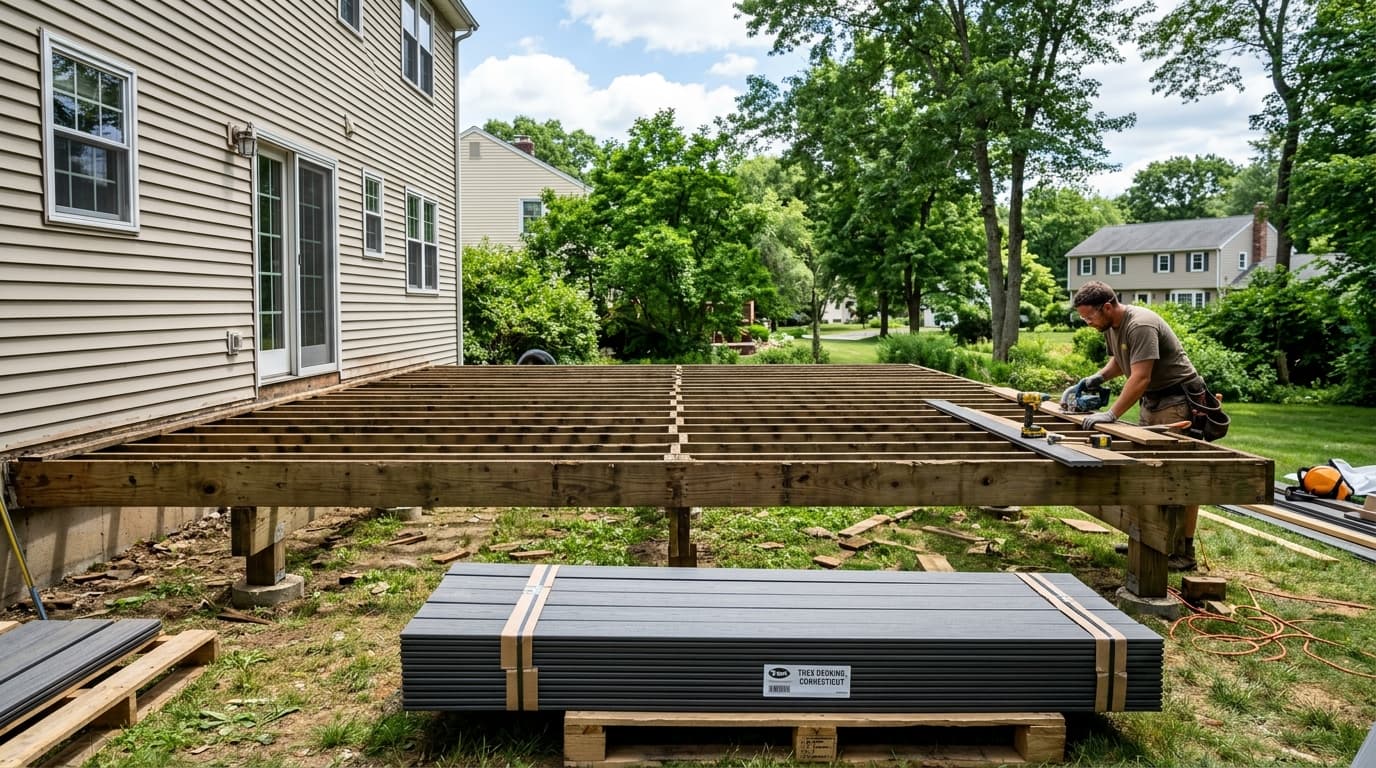
New Deck Construction in Connecticut
Plan and build a new deck around the home, property, desired use, material preferences and permitting requirements.
Planning Your New Deck
We start by understanding how you plan to use the space — dining, grilling, lounging, entertaining, pool access or quiet mornings. Your intended use determines the deck size, shape, height and relationship to the home. We consider sun exposure, prevailing wind, privacy from neighbors, views, furniture layout, traffic flow and under-deck use.
Materials, Railings and Stairs
Compare pressure-treated wood, cedar, capped composite and advanced PVC based on appearance, maintenance requirements, heat in direct sun, durability and budget. Railing options include wood, composite, aluminum and cable systems. Stairs are designed for safe rise, comfortable run and logical placement.
Permitting and Site Preparation
Most new deck construction in Connecticut requires a building permit. We coordinate the permit application, address any engineering requirements and schedule inspections. Site preparation includes establishing accurate footing locations, managing grade changes and protecting landscaping and utilities.
Common Questions About New Deck Construction
Do I need a permit to build or repair my deck?
Yes, in most Connecticut towns, any deck that attached to the house or is over 30 inches off the ground requires a building permit. Don't worry, we handle all the permit paperwork and inspections for you.
What is the best material for a deck in Connecticut?
Composite decking (like Trex or TimberTech) is highly recommended for Connecticut weather because it resists moisture, mold, and doesn't splinter. However, pressure-treated wood or cedar are excellent, cost-effective options if you are willing to keep up with bi-annual staining.
Can I just replace the top boards and keep the frame?
Yes! If your deck's underlying structure (joists, beams, and ledger board) is sound and properly flashed, we can perform a 'deck resurfacing.' This saves you thousands of dollars while giving you a brand-new looking deck surface and railings.
How long does a typical deck project take?
Small repairs can often be done in 1-2 days. A surface replacement might take 3-5 days. A complete custom build can take 1-3 weeks once permits are approved and materials are delivered.
Cost Factors
- Deck size and height
- Material selection
- Site conditions and access
- Railing and stair scope
- Feature selections
Timeline
2–6 weeks depending on scope
Written Project Scopes
Every proposal defines the included work, project assumptions, selected materials, pricing and next steps.
HIC.0705773
Connecticut-registered home improvement contractor. Fully insured. Written project scopes. Repair, resurfacing and replacement options.